Zinc 15 mg zinc bisglycinate, 100 capsules

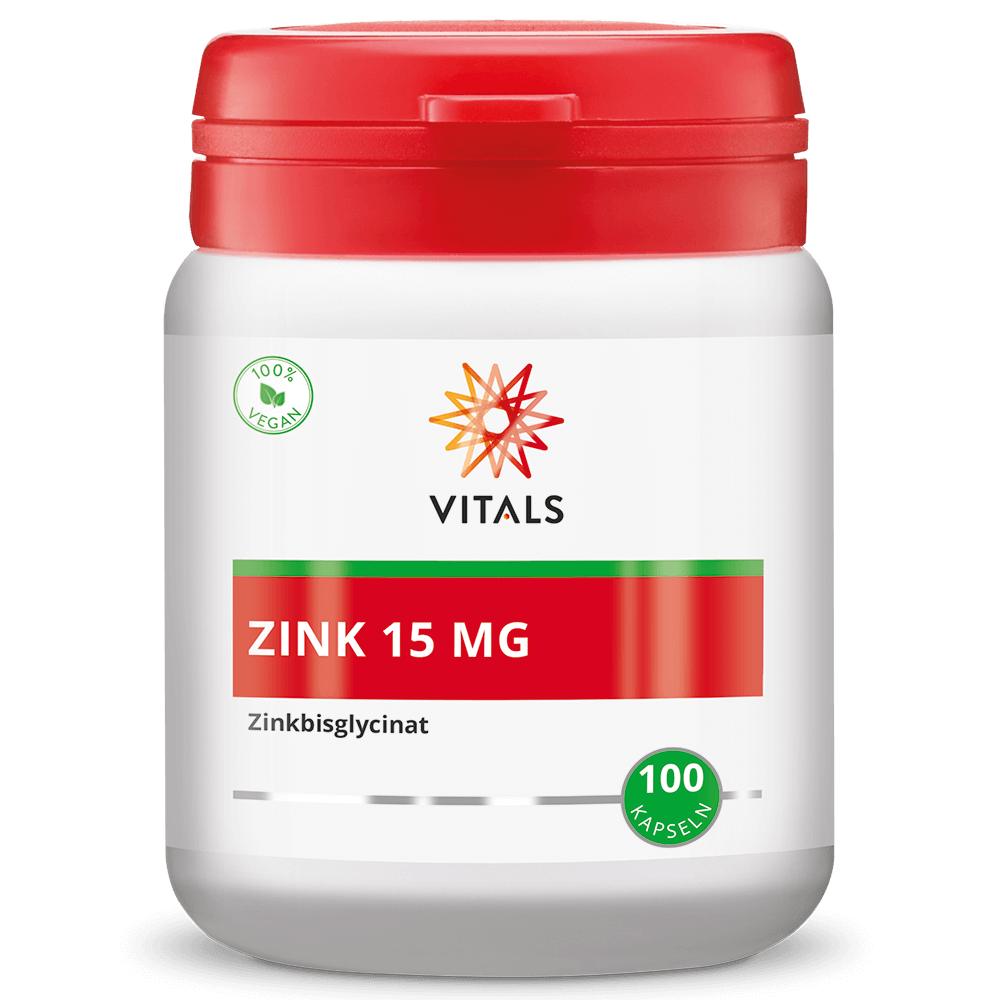

- Amino acid chelate (zinc bisglycinate) from Albion Minerals
- With TRAACS® feature ("The Real Amino Acid Chelate System")
- Compound form with superior bioavailability
| Quantity | Unit price | Base price |
|---|---|---|
| To 1 |
€19.95
|
€867.39 / 1 Kilogramm |
| To 4 |
€18.95
|
€823.91 / 1 Kilogramm |
| From 5 |
€17.95
|
€780.43 / 1 Kilogramm |
(UVP: €19.95)
Available, delivery time 1-4 days (D), 5-10 days (EU + Intl)
Minerals - Best absorbed in chelated or bisglycinate form!
This product is zinc bisglycinate zinc, a process in which each zinc particle is powerfully combined (chelated) with two (up to) molecules of the amino acid glycine. Such a compound is generally referred to as an amino acid chelate or amino acid chelated mineral. The Greek origin of the term "chelate" means something like "claw".
This type of compound was chosen because its bioavailability is particularly high. Vitals only uses genuine amino acid chelates from Albion Minerals, which can be recognised by the TRAACS® brand, which stands for The Real Amino Acid Chelate System. This brand is used to differentiate from other amino acid chelates that may be inferior or unstable. Albion holds over 100 patents worldwide that protect the process, science and structure of their amino acid chelated minerals. In addition, their minerals are analysed and every batch produced is quality tested. It is essential to check that chelation has actually taken place and that the bonds are sufficiently strong.
Advantages of minerals chelated with amino acids
The structure of an amino acid chelate is robust enough to withstand the attacks of stomach acid and digestive enzymes (unlike other mineral compounds), but weak enough to release the mineral element once it has been absorbed by the intestinal cells. The amino acids enclose the mineral element and protect it during digestion so that it cannot escape. In addition, the electrical charge of the chelate is neutral, which means that it does not adhere to pieces of food in the stomach and intestines. As a result, the amino acid chelate passes completely into the small intestine, where it is absorbed as a dipeptide (a compound of two amino acids). This is very beneficial as the body can absorb amino acids (especially dipeptides) extremely easily, especially when they are made up of the smallest amino acid, glycine. Amino acid chelated minerals are much more absorbable than other types of minerals. The amino acid-chelated mineral reaches the mucous cells of the epithelial tissue of the jejunum (middle part of the small intestine) by active transport, without competing with other minerals. Only through metabolic processes in the mucous cells is the glycine broken down together with the mineral and made available for the various organs and body systems.
Effect of zinc in the organism
Due to its extensive and versatile effect, zinc is often used by therapists. Zinc is present in all body tissues and is particularly concentrated in the cell nucleus. The mineral is essential for the function of over 300 enzymes, the metallo-enzymes, which utilise a zinc ion as a cofactor. It also forms a significant part of the structure of proteins and cell membranes. In this way, zinc is involved in numerous processes in the organism, such as the cell division process and hormone balance. Zinc is also involved in the normal synthesis and breakdown of carbohydrates, fats, proteins and DNA. Zinc has a positive effect on the immune system by supporting T-cell production, promoting the production of cytokines and contributing to the function of natural killer cells. Zinc protects cells from oxidative damage, partly through its role in the function of the antioxidant enzymes catalase and superoxide dismutase (SOD), and also helps to maintain a healthy acid-base balance. Zinc acts as a cofactor for carbonic anhydrase, an enzyme that converts carbon dioxide into bicarbonate (and vice versa). Bicarbonate is one of the crucial buffers that helps to keep the acidity of the blood and other extracellular fluids as constant as possible.
Without copper
Zinc and copper have an antagonistic relationship. Zinc intake of 50 mg or more per day over a period of more than one month can lead to low copper levels, which is undesirable, but excessive copper levels are also problematic, especially for older people. Vitals has therefore deliberately chosen not to combine zinc and copper in this product. It is assumed that there is a high probability that someone is also taking a daily multivitamin and mineral supplement and is therefore already consuming additional copper. It is recommended to supplement with additional copper at a dosage of 45 mg/day (3 capsules), ideally at a different time of the day to avoid competition in intake.
Nutritive properties
- Zinc contributes to normal acid-base metabolism and normal carbohydrate metabolism.
- Zinc contributes to normal cognitive function and the maintenance of normal vision.
- Zinc contributes to normal fertility and normal reproduction.
- Zinc contributes to a normal metabolism of macronutrients and to a normal vitamin A metabolism.
- Zinc contributes to normal fatty acid metabolism and normal protein synthesis.
- Zinc contributes to the maintenance of normal bones, hair, nails and skin.
- Zinc contributes to the maintenance of normal testosterone levels in the blood.
- Zinc contributes to the normal function of the immune system and helps to protect cells from oxidative stress.
- Zinc has a function in cell division and contributes to normal DNA synthesis.
Nutritional declaration
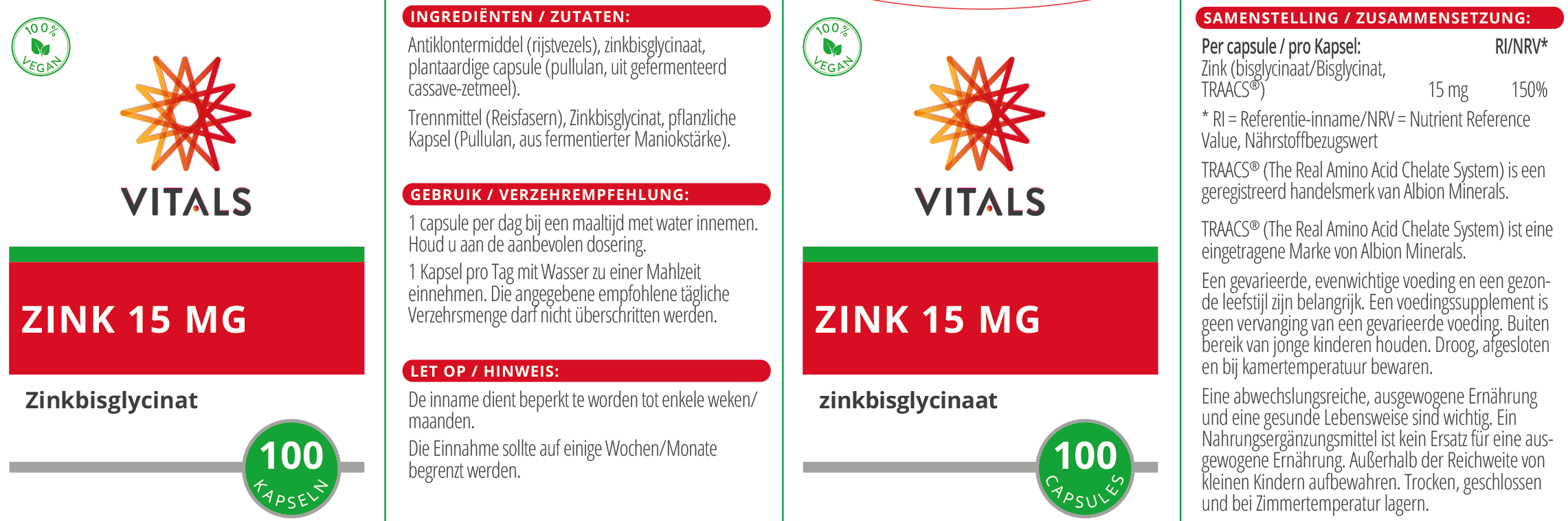
| Micronutrients | per daily portion of 1 capsule |
| Zinc | 15 mg (150 %*) |
*Reference value according to Regulation (EU) No. 1169/2011
TRAACS® ("The Real Amino Acid Chelate System") is a registered trademark of Albion Minerals
Ingredients
Release agent (rice fibres), zinc bisglycinate, vegetable capsule (pullulan, from fermented manioc starch).
Recommended dosage
take 1 capsule per day with water with a meal.
Notes from EnergyVital
Swiss customers please note that this zinc may not be imported because a maximum value of 5.3 mg zinc applies to food supplements in Switzerland. If it is nevertheless ordered, we are not liable for any problems with customs.
Storage instructions
Store in a cool, dry place away from light (not in the refrigerator).
Legal information
The recommended daily intake must not be exceeded. Food supplements are no substitute for a balanced and varied diet and a healthy lifestyle. Store out of the reach of small children.
| Administration: | In vegan capsules. |
|---|---|
| Application: | Skin & Hair, Immune system |
| Micronutrients: | Zinc |
| Product Type: | Dietary supplements |
| Quality: | Gluten-free, Lactose-free, Magnesium stearate-free, Vegan |
We have 2 products with zinc chelates on offer, Woscha L-OptiZink and Vitals Zinc Bisglycinate. What is the difference?
Zinc chelates, the better zinc
Metals such as iron or zinc cannot simply be absorbed in pure form. It would be impossible for the intestine to absorb the necessary milligrams of minerals from zinc or iron pieces, that seems logical, even without studying biology.
So they have to be absorbed in the form of chemical compounds that the intestine can absorb. In the blood or in the cells, the body can then do what it wants with the metals after it has dissolved them out of these compounds.
There are chemical compounds that are more suitable and those that are more or less suitable. You can often experience this immediately after consuming the capsule, some quickly lead to nausea.
This is particularly familiar to people who have to take cheap quality preparations from the pharmacy because the doctor is not familiar with these differences. Such unlucky people often have this problem with zinc or iron.
Chelates are among the best compounds. Firstly, they are generally very well absorbed by the body and secondly, they avoid side effects such as nausea or intestinal complaints.
Chelates are compounds of metals or minerals with amino acids.
Zinc bisglycinate and L-zinc methionine
As far as zinc is concerned, we have products that contain zinc bisglycinate or L-zinc methionine. These are two different organic zinc compounds in which zinc is linked to different amino acids:
- Zinc bisglycinate: Here, a zinc atom is linked to two glycine molecules. This form is very well absorbed by the body and is particularly mild to the stomach.
- L-zinc methionine: In this compound, zinc is bound to the amino acid methionine, which contains sulphur. This variant is often used in special treatments (such as for the skin) because of its ability to ward off free radicals and its good usability.
Important differences at a glance
Zinc bisglycinate:
- Binding partner: Two glycine molecules (simplest amino acid)
- Chemical structure: Zinc complex (double)
- Special feature: Very well tolerated, avoids competition with other minerals in the intestine
L-zinc methionine
- Binding partner: L-methionine (amino acid with sulphur)
- Chemical structure: Zinc complex (often simple)
- Speciality: Often sold as OptiZinc and is said to remain in the body for a particularly long time.
Both are high-quality organic forms of zinc and are much better absorbed by the body than inorganic forms such as zinc oxide or zinc sulphate.
Vitals, our new brand from 2025
We are constantly on the lookout for brands that represent our ideals: The highest quality, consistent omission of superfluous additives such as titanium dioxide or porcine gelatine, very good value for money and absolute reliability in delivery to us and therefore also to customers.
This is very difficult because such companies are extremely rare among the mass of manufacturers of food supplements that are now on the market. But we have managed to find them again, with Vitals from the Netherlands!
Manufacturer's address: Vitals Voedingssupplementen BV, Pieter Lieftinckweg 29, 1505 HX Zaandam, Netherlands. E-mail: customer service@vitals.eu.
Login