
Collagen
Collagens are a group of structural proteins found only in multicellular animals, mainly in connective tissue. Collagens are found in the white, inelastic fibres of tendons, ligaments, bones and cartilage, among other things. Layers of skin are also made up of collagens(Wikipedia). Collagen, the most abundant protein in the human body, plays a fundamental role in the resilience and elasticity of tissue. Although it is naturally produced by the body, its ability to be synthesised decreases over time, especially with age. Therefore, supplementing with collagen can help to slow down the signs of ageing. To achieve a visible effect, it is important to be careful when choosing a collagen supplement. Various criteria such as origin, collagen type, concentration and traceability should be considered when making a decision.... Read more


Premium collagen, pure collagen peptides, 450 g
Content: 0.45 Kilogramm (€59.98 / 1 Kilogramm)
-
From 1€29.99€66.64 / 1 Kilogramm
-
From 2€28.50€63.33 / 1 Kilogramm
-
From 5€26.99€59.98 / 1 Kilogramm

Collagen VS for skin, hair and nails, 250 g
Content: 0.25 Kilogramm (€125.80 / 1 Kilogramm)
-
From 1€34.95€139.80 / 1 Kilogramm
-
From 2€33.20€132.80 / 1 Kilogramm
-
From 3€31.45€125.80 / 1 Kilogramm
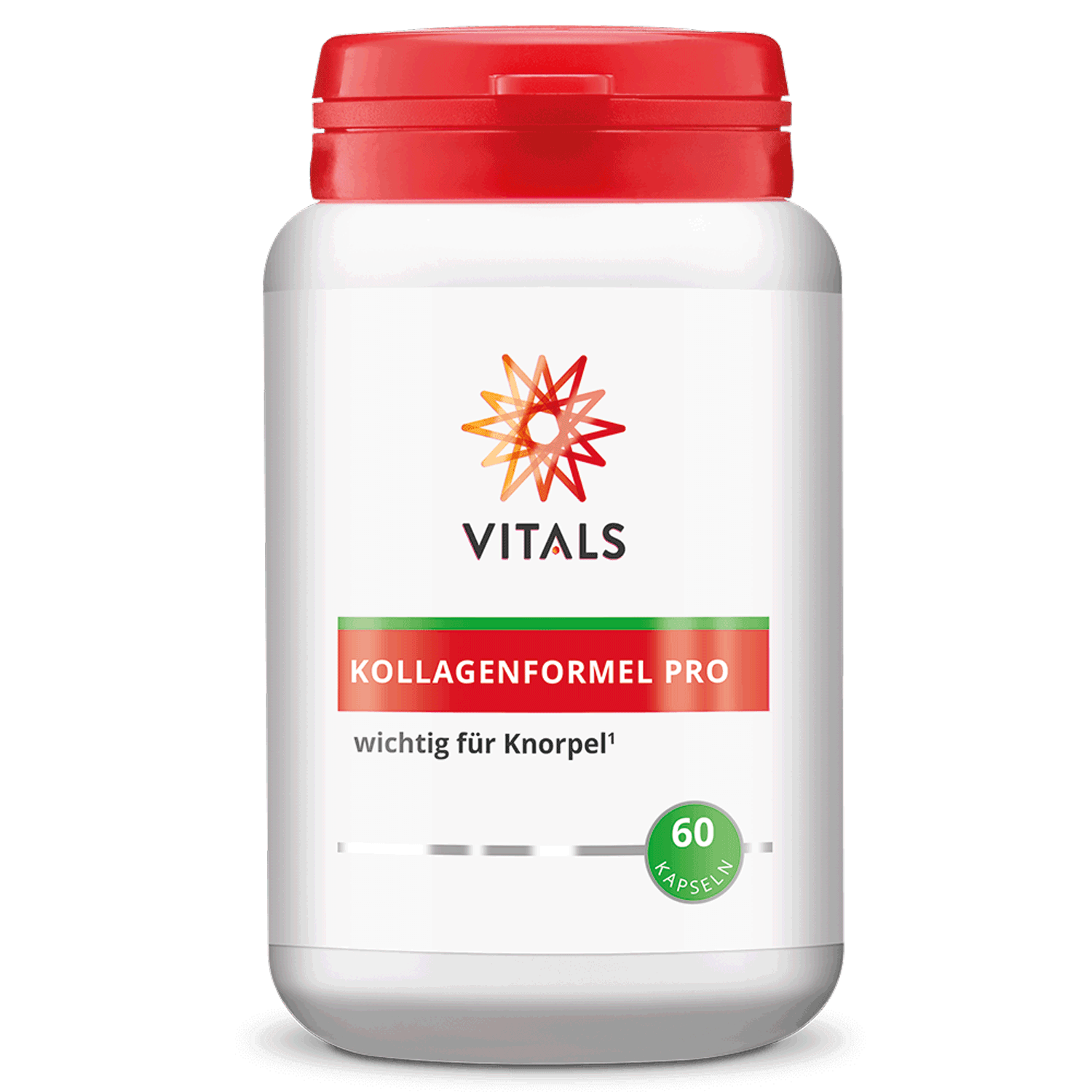
Collagen Formula Pro for Cartilage, 60 capsules
Content: 0.036 Kilogramm (€1,498.61 / 1 Kilogramm)
-
From 1€59.95€1,665.28 / 1 Kilogramm
-
From 2€56.95€1,581.94 / 1 Kilogramm
-
From 5€53.95€1,498.61 / 1 Kilogramm

Hydrolysed Collagen, 200 g
Content: 0.2 Kilogramm (€107.00 / 1 Kilogramm)
-
From 1€23.80€119.00 / 1 Kilogramm
-
From 2€22.60€113.00 / 1 Kilogramm
-
From 5€21.40€107.00 / 1 Kilogramm
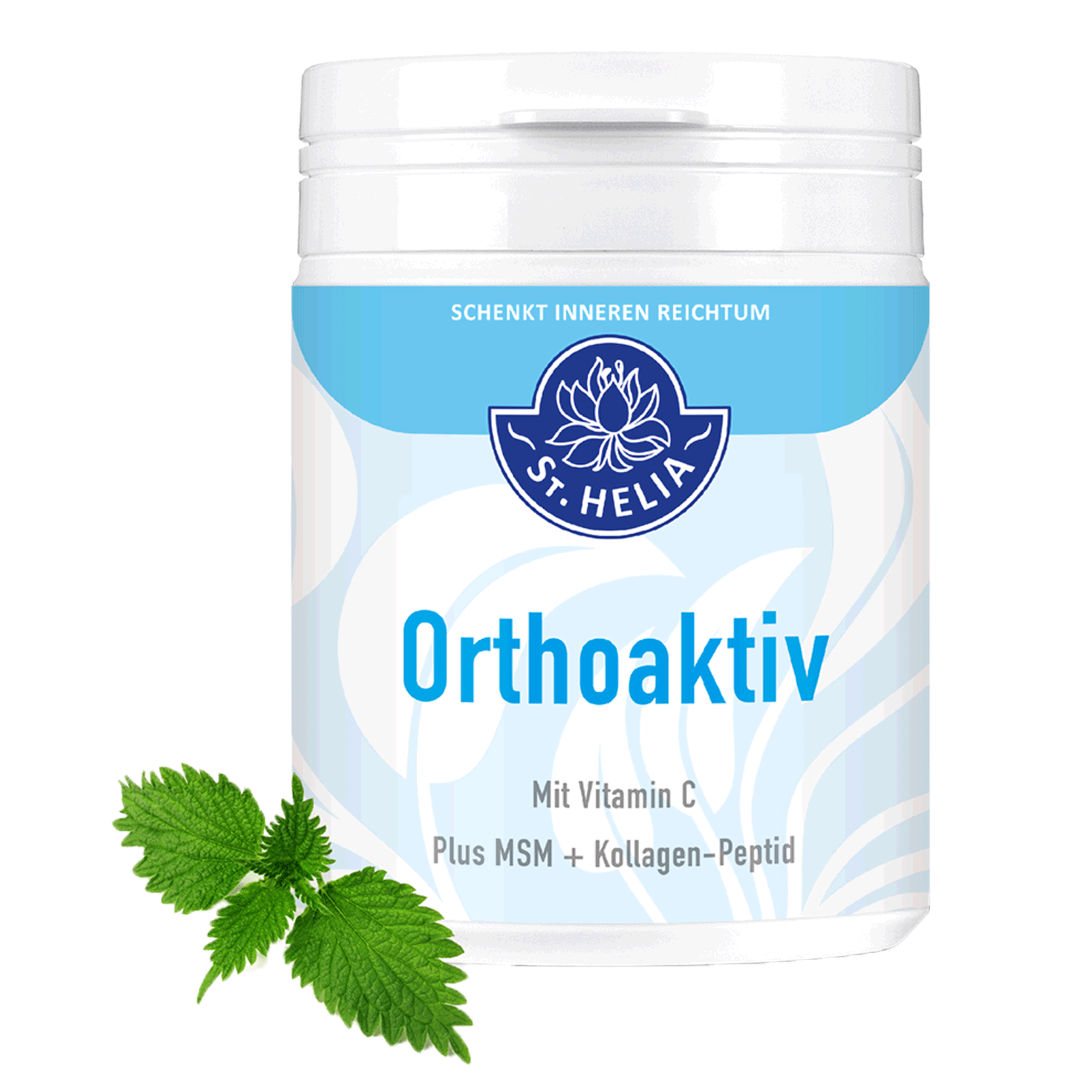
Orthoaktiv with Vitamin C, Collagen and MSM, 90 tablets
Content: 0.18 Kilogramm (€200.00 / 1 Kilogramm)

Premium fish gelatine, 300 g powder
Content: 0.3 Kilogramm (€88.67 / 1 Kilogramm)
-
From 1€29.60€98.67 / 1 Kilogramm
-
From 2€28.10€93.67 / 1 Kilogramm
-
From 5€26.60€88.67 / 1 Kilogramm
What is collagen
The name comes from the Greek word "collagen", which is made up of the two words "Kolla" (glue) and "Gen" (product). Collagen is a structural protein consisting of amino acids and plays a crucial role in the body. It is present in almost all of our cells as well as in our skin, tendons, cartilage and ligaments. The function of collagen is of great importance as it is responsible for the strength, elasticity and renewal of all tissues. Without this protein, the body cannot function optimally and ages prematurely. Normally, our body produces collagen on its own. Unfortunately, this production decreases from the age of 25, which inevitably leads to premature ageing of the entire body. This process accelerates over time and becomes even more noticeable during the menopause.
The different types of collagen
Our body contains a variety of collagen types, with collagen types I, II and III being the dominant ones and together making up almost 90% of these proteins in the body. But what purpose do they fulfil?
Collagen type I
Collagen type I is the most abundant protein in the body and plays a crucial role in the structural support of bones, connective tissue, organs and blood vessels. With its impressive elasticity, this collagen type helps to reduce wrinkles and promote skin elasticity. It also helps to keep the skin moisturised and healthy. It is generally known that the concentration of collagen type I in the body decreases with age, which is why experts recommend taking collagen type I to combat the first signs of skin ageing.
Collagen type II
Collagen type II is found in cartilage and is responsible for its flexibility and elasticity. This tissue is found in various parts of the body such as the nose, bronchi and chest. Collagen type II cushions the joints and thus contributes to joint health.
Collagen type III
Collagen type III belongs to the group of fibrillar proteins and is found in lymphatic tissue and bone marrow. Due to its branched fibres, it holds together the elements that are responsible for the formation of blood cells. It also plays a role in wound healing. Since collagen type III is also present in the dermis (name of a layer of skin), it works in synergy with collagen type to support various skin functions.
In addition to the main components, which make up around 10 to 20 % of collagens in the body, other types such as collagen IV, V or X are also found. Each of these collagen types fulfils a specific task, but they all work together to maintain the health of the organism.
Bovine collagen versus marine collagen:
Bovine collagen is extracted from the skin of cattle, then sterilised and liquefied. Similar to marine collagen, it is mainly used for ageing skin. However, it has a decisive disadvantage: the body absorbs it, excretes it and thus loses the positive effects. In contrast, marine collagen comes from fish and crabs. It is more efficient than bovine collagen as it is easier to digest and can therefore be better absorbed by the body. In addition, its composition is more similar to the human collagen structure. Unlike bovine collagen, it is not excreted, which makes its positive effect more long-lasting.