
The importance of iron in the body
The trace element iron fulfils important functions in the body, for example by playing a major role in oxygen transport and blood formation. Iron is a trace element, similar to magnesium, chlorine, sodium, sulphur and others. These mineral salts are of crucial importance for the proper functioning of the human body and all living organisms in general... Read more
Lactoferrin-BT, 60 capsules
Content: 0.023 Kilogramm (€1,956.52 / 1 Kilogramm)
-
From 1€49.95€2,171.74 / 1 Kilogramm
-
From 2€47.40€2,060.87 / 1 Kilogramm
-
From 5€45.00€1,956.52 / 1 Kilogramm
Iron 25 mg bisglycinate + vitamin C, 100 capsules
Content: 0.07 Kilogramm (€307.86 / 1 Kilogramm)
-
From 1€23.95€342.14 / 1 Kilogramm
-
From 2€22.75€325.00 / 1 Kilogramm
-
From 5€21.55€307.86 / 1 Kilogramm

Iron Active - Iron chelates, 90 capsules
Content: 0.06 Kilogramm (€315.00 / 1 Kilogramm)
-
From 1€21.00€350.00 / 1 Kilogramm
-
From 2€19.90€331.67 / 1 Kilogramm
-
From 5€18.90€315.00 / 1 Kilogramm

Spirulina Premium Iron Plus, 300 pellets
| Nutrients from the microalgae Spirulina platensis. An organic alternative to iron. |
Content: 0.12 Kilogramm (€220.83 / 1 Kilogramm)
-
From 1€29.50€245.83 / 1 Kilogramm
-
From 2€28.00€233.33 / 1 Kilogramm
-
From 4€26.50€220.83 / 1 Kilogramm
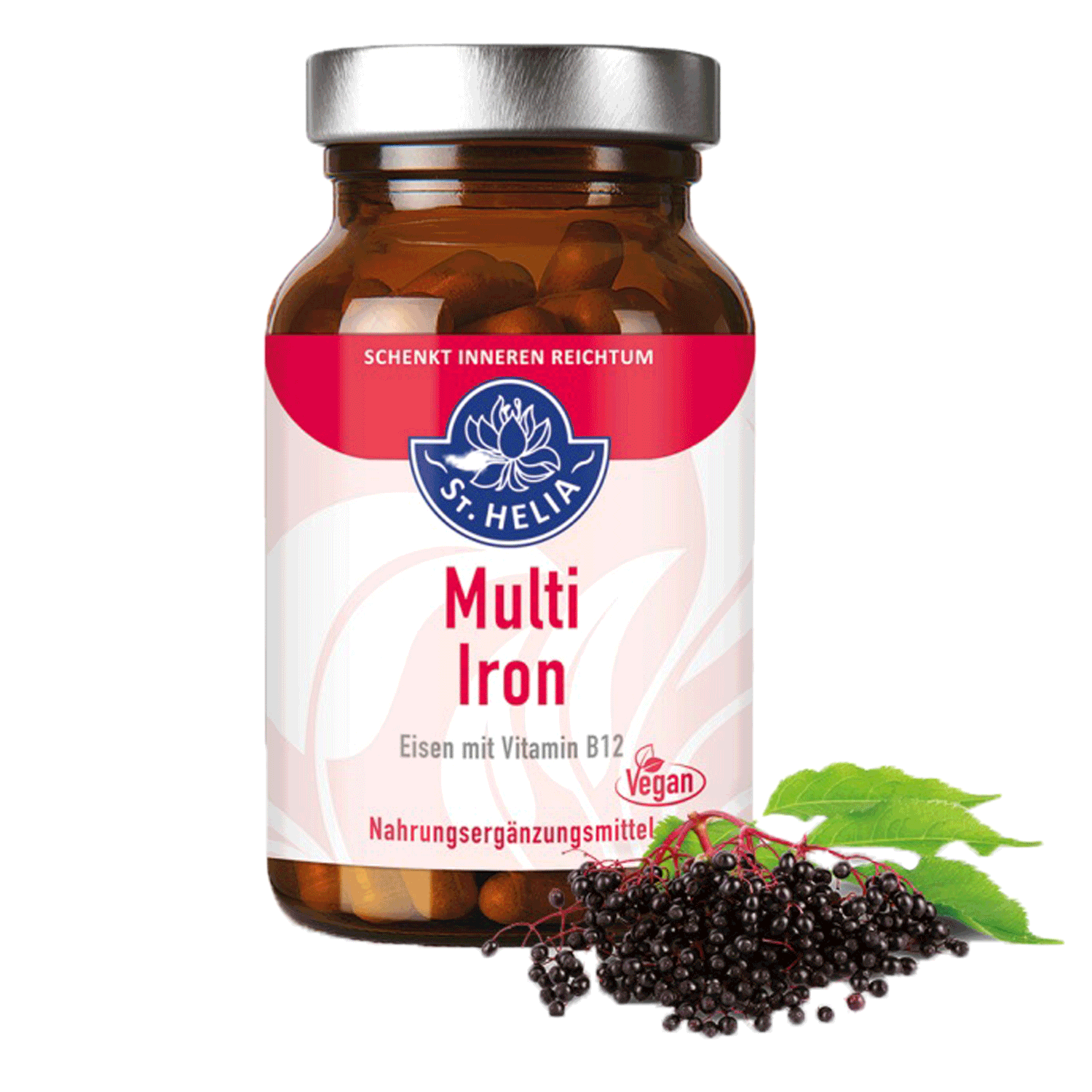
Multi Iron, 90 capsules
Content: 0.045 Kilogramm (€355.56 / 1 Kilogramm)
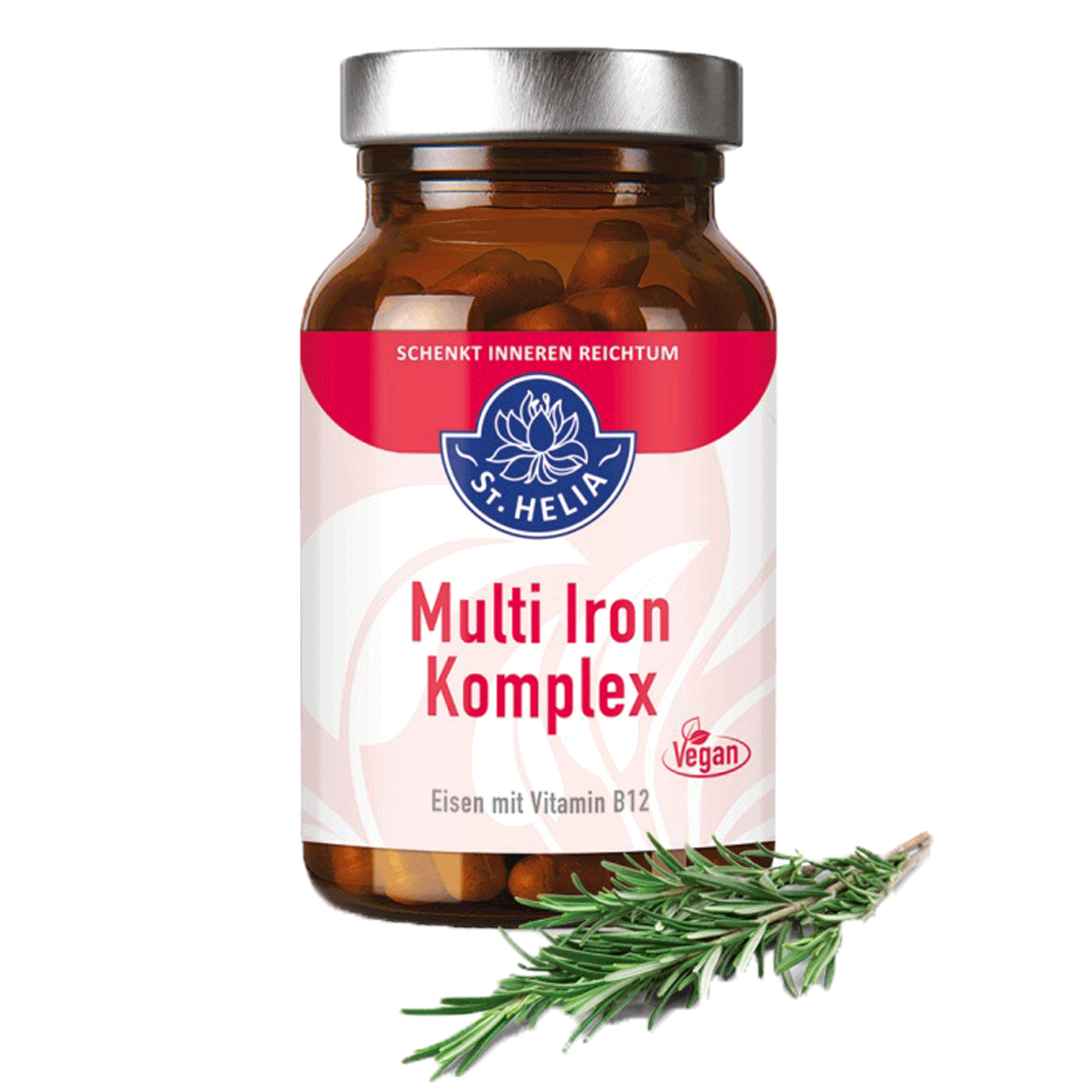
Multi Iron Complex Iron, 90 capsules
Content: 0.045 Kilogramm (€497.78 / 1 Kilogramm)
-
From 1€24.90€553.33 / 1 Kilogramm
-
From 2€23.60€524.44 / 1 Kilogramm
-
From 5€22.40€497.78 / 1 Kilogramm

Iron plus FOOD STATE, 60 tablets
Content: 0.018 Kilogramm (€1,094.44 / 1 Kilogramm)
-
From 1€21.90€1,216.67 / 1 Kilogramm
-
From 2€20.80€1,155.56 / 1 Kilogramm
-
From 5€19.70€1,094.44 / 1 Kilogramm
Occurrence of iron in the body
In contrast to macroelements such as hydrogen, oxygen or carbon, which occur in larger quantities, trace elements are present in very small amounts in the body, often less than 1 gram per kilogram of body weight. Despite their small quantity, trace elements are essential and fulfil numerous functions, including assisting in the formation of enzymes, promoting muscle contraction and contributing to energy production. They are also components of various body parts such as bones, teeth and haemoglobin. Iron is a component of haemoglobin and plays a crucial role in the transport of oxygen through the red blood cells in the blood. In smaller amounts, it also serves to store oxygen and supports the proper functioning of various other cells in the body. There are two main types of iron: Haem iron, which is mainly found in meat and fish, and non-haem iron, which is found in vegetables and dairy products. The former is absorbed more efficiently than the latter, and both are delivered to the body during the digestive process
A (very brief) explanation of iron levels
In the doctor's laboratory report, there are various values that have to do with iron balance. Not all of them are easy for patients to understand, most of them only really mean something to doctors. Two values are particularly important and easy to understand.
Haemoglobin - the "working" iron
One laboratory value that doctors often ask about is haemoglobin - the "active" iron circulating in the blood, i.e. the iron that is currently doing its job of transporting oxygen into the cells. If this is too low, not enough oxygen arrives, which brings with it the typical symptoms such as tiredness and paleness. 8.4 - 10.7 mmmol/l should be the normal value in the blood. This is the current "modern" notation, which unfortunately hardly any patients understand. In the past, the more comprehensible notation grams per litre or g/dl was used, which is easier to understand for laypeople and is therefore still often used in patient information leaflets. Here are the current values in g/dl, which are different for men and women:
Normal values for haemoblobin - men: 13-18 g/dl, women: 12-16 g/dl. It becomes critical from a health point of view if these values are not reached, then we speak of anaemia.
Ferritin - the iron store
Iron is extremely important in the body, so it cannot rely on the fact that it comes regularly enough with food, but must create its own buffer or store so that it always has enough iron available for haemoglobin.
There is also a standard value for this store. The body endeavours to keep the haemoglobin level constant, which means that the first indications of a risk of deficiency can be found in the iron store. Even if the haemoglobin value is still OK, the store may already be considerably depleted. This gives you the chance to counteract a sometimes quite dangerous iron deficiency in good time. The normal value for ferritin - men: between 20 and 250 μg/l. Women before the menopause: between 10 and 120 micrograms per litre (μg/l), after which they are similar to the value for men.
Transferrin, which transports iron between digestion and ferritin or between ferritin and other stations, is also important. For reasons of clarity and comprehensibility, we will save an explanation at this point, an understanding of haemoglobin and ferritin is sufficient for the normal user.
This explanation is very simplified and cannot replace an analysis by a doctor!
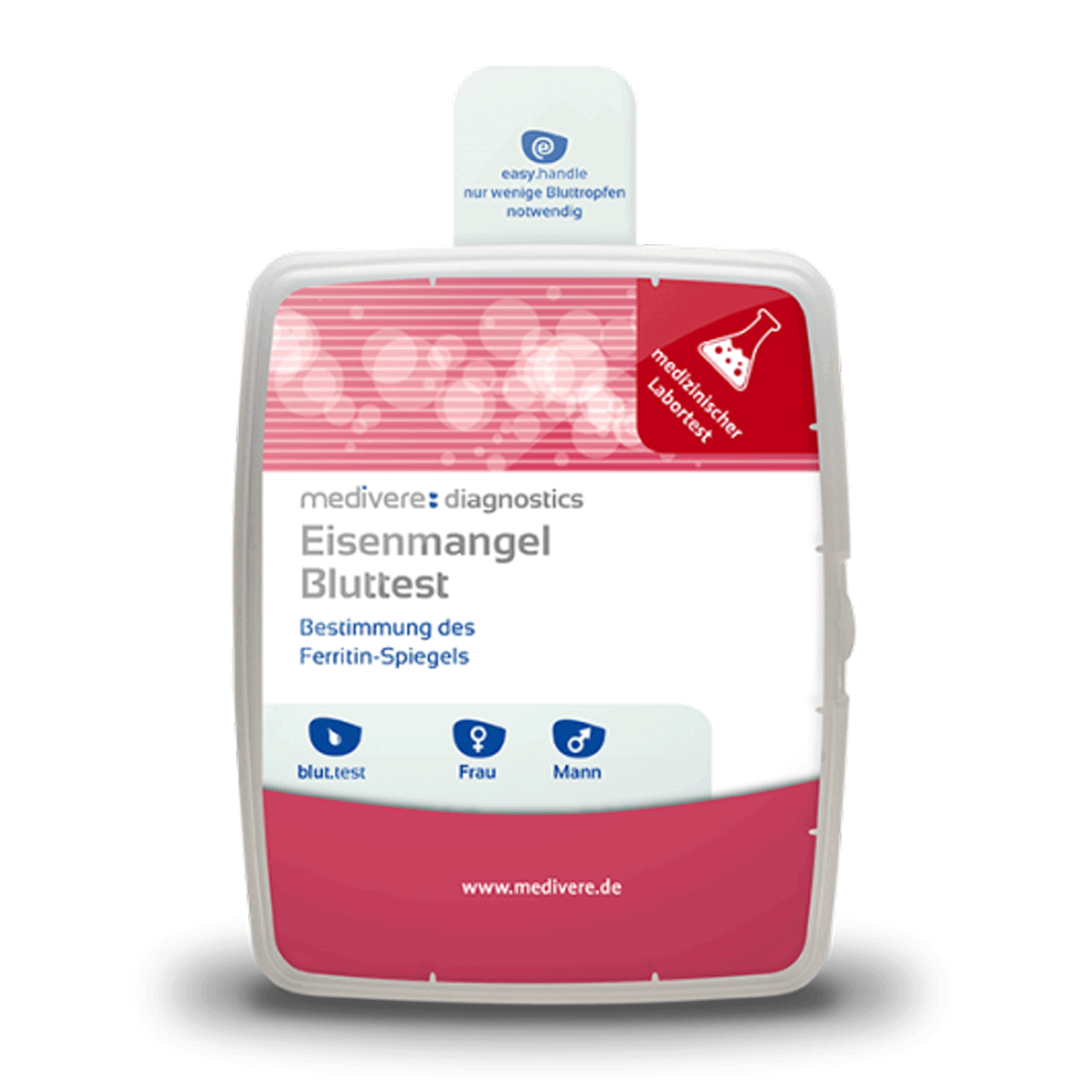
Unfortunately, it happens again and again that doctors refuse to carry out more precise tests, perhaps because they do not consider it necessary or because they generally regard everything to do with micronutrients as unscientific esotericism or simply because they have no idea and want to disguise this by claiming that it is unnecessary. In this case, our customers are welcome to take action themselves and use the Medivere iron test.
However, if this shows very different values, a doctor should always be consulted again - and if your own doctor refuses, you should possibly think about changing doctors!
There are a number of diseases that can also influence these values and some of them are very serious. It is essential to clarify these issues before attempting to solve the problem.
Attached are 2 examples of laboratory reports.
Example 1: Haemoglobin low but just fine, erythrocytes (which transport oxygen and consist of 90 % haemoglobin) also at a low level. Ferritin already deficientIn this case, you may still feel nothing or possibly slight exhaustion and should top up your iron stores as quickly as possible, depending on your other diet (meat or non-meat) also with medium-dose supplements (7-14 mg per daily portion).
Example 2: Ferritin and haemoglobin are already severely deficient, and the person concerned can easily notice this with constant tiredness (paleness is not always a reliable indicator).
In this case, the doctor should be consulted first. He or she must find the cause of the deficiency, e.g. an extremely unbalanced diet or permanent blood loss due to gynaecological problems or intestinal inflammation, and treat it medically.
It may also be important to remedy the situation quickly with iron infusions; diet and food supplements tend to have a medium to long-term effect.
Only when all of this has been clarified, confirmed and treated should you take action on your own, e.g. with nutritional supplements. Self-treatment without a doctor is no longer recommended!
By the way: Really hospital-relevant events such as chronic inflammation or tumours should always be treated by a doctor. For less drastic problems, however, a dedicated and well-trained ecoptrophologist, alternative practitioner or osteopath (all of whom have recently had to prove their qualification as alternative practitioners) can often be the better and, above all, usually more patient contact person!