
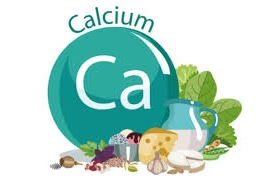
Calcium, the most important mineral in terms of quantity
Calcium is particularly important for the strength of bones (bone density) and teeth. The bone system is the largest calcium store in the body. Calcium also plays an important role in the transmission of stimuli in muscles and nerves, the intracellular (within a cell) transmission of signals and the stabilisation of cell membranes. Calcium is also significantly involved in blood clotting. As with all minerals and vitamins, it makes sense to take dietary supplements if a deficiency has been detected. This can be done by the family doctor with a simple blood test, but unfortunately many people only realise it when the doctor diagnoses osteoporosis, for example. However, lifelong prevention from a young age makes much more sense than only starting after a diagnosis has been made. Although a disease caused by calcium deficiency can be greatly improved by starting to take caclium for a longer period of time, it can never be completely cured... Read more

Sango sea coral from Okinawa, 350 g powder
Content: 0.35 Kilogramm (€88.57 / 1 Kilogramm)
-
From 1€34.90€99.71 / 1 Kilogramm
-
From 2€33.00€94.29 / 1 Kilogramm
-
From 5€31.00€88.57 / 1 Kilogramm

Sango sea coral from Okinawa, 100 g powder
Content: 0.1 Kilogramm (€107.00 / 1 Kilogramm)
-
From 1€11.90€119.00 / 1 Kilogramm
-
From 2€11.30€113.00 / 1 Kilogramm
-
From 5€10.70€107.00 / 1 Kilogramm
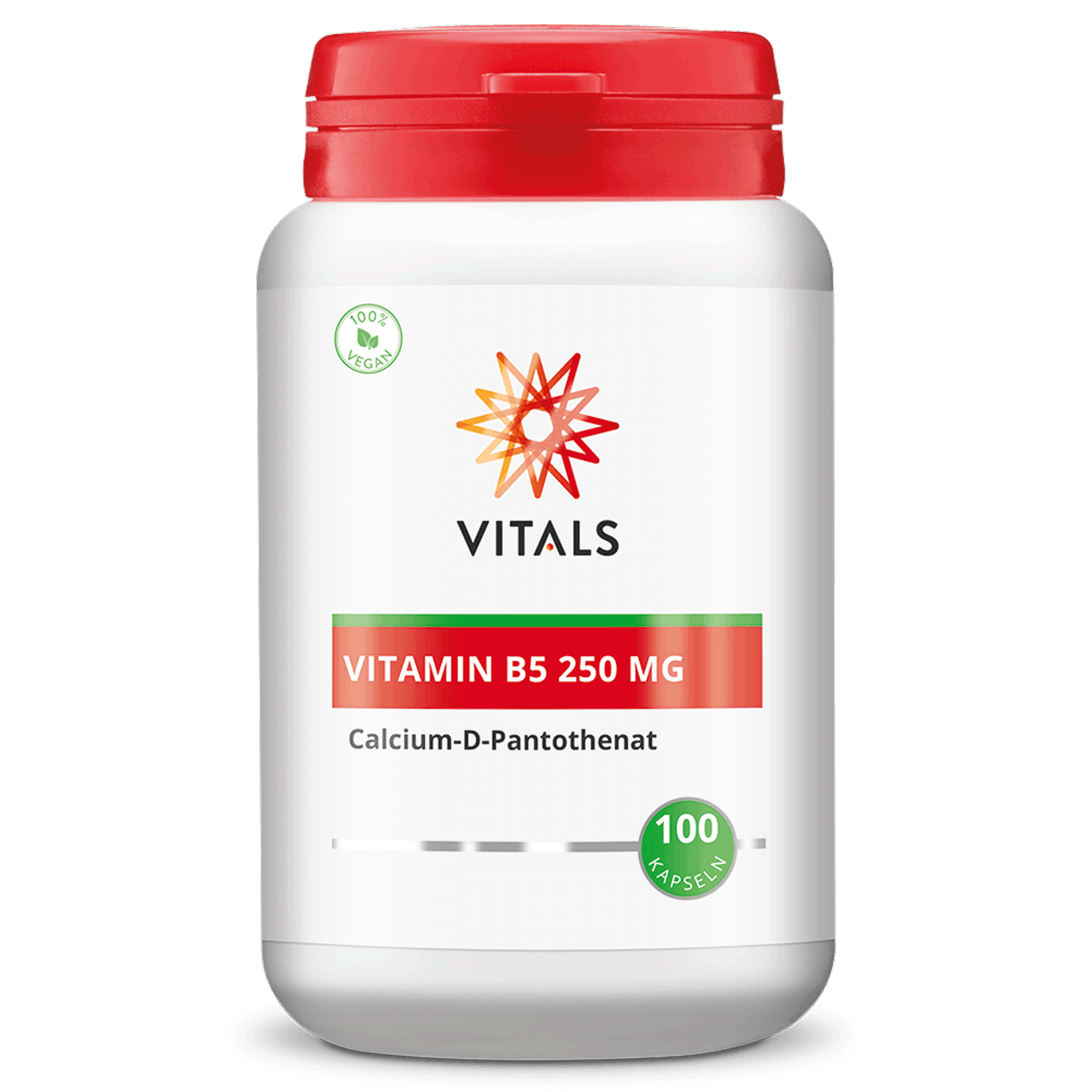
Vitamin B5 250 mg 100 capsules
Content: 0.052 Kilogramm (€483.65 / 1 Kilogramm)
-
From 1€27.95€537.50 / 1 Kilogramm
-
From 2€26.55€510.58 / 1 Kilogramm
-
From 5€25.15€483.65 / 1 Kilogramm

Calcium citrate, 180 capsules
Content: 0.153 Kilogramm (€152.29 / 1 Kilogramm)
-
From 1€25.90€169.28 / 1 Kilogramm
-
From 2€24.60€160.78 / 1 Kilogramm
-
From 5€23.30€152.29 / 1 Kilogramm

Vitamin B5, 90 capsules
Content: 0.064 Kilogramm (€250.00 / 1 Kilogramm)

Mineral Complex, 180 capsules
Content: 0.149 Kilogramm (€155.03 / 1 Kilogramm)
-
From 1€25.70€172.48 / 1 Kilogramm
-
From 2€24.40€163.76 / 1 Kilogramm
-
From 5€23.10€155.03 / 1 Kilogramm

Bone Calcium, 150 capsules
Content: 0.125 Kilogramm (€204.80 / 1 Kilogramm)
-
From 1€28.50€228.00 / 1 Kilogramm
-
From 2€27.00€216.00 / 1 Kilogramm
-
From 5€25.60€204.80 / 1 Kilogramm

Sango coral, 200 g powder
Content: 0.2 Kilogramm (€112.50 / 1 Kilogramm)
-
From 1€24.99€124.95 / 1 Kilogramm
-
From 2€23.70€118.50 / 1 Kilogramm
-
From 5€22.50€112.50 / 1 Kilogramm

Sango coral, 90 capsules
Content: 0.11 Kilogramm (€212.73 / 1 Kilogramm)
-
From 1€24.90€226.36 / 1 Kilogramm
-
From 3€23.40€212.73 / 1 Kilogramm
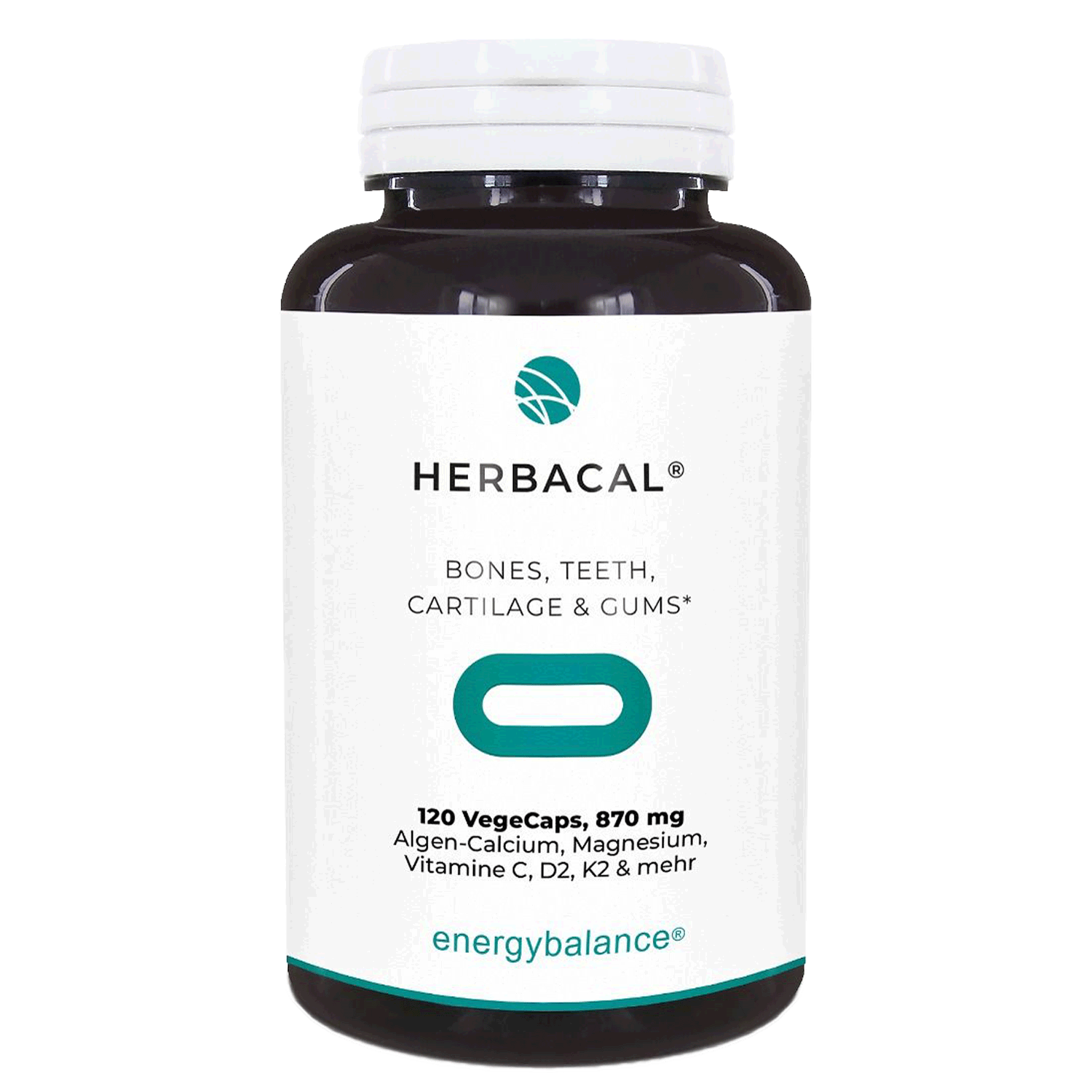
HerbaCal for bones and teeth, 120 VegeCaps
Content: 0.12 Kilogramm (€379.17 / 1 Kilogramm)
-
From 1€49.80€415.00 / 1 Kilogramm
-
From 2€47.50€395.83 / 1 Kilogramm
-
From 5€45.50€379.17 / 1 Kilogramm

Bone Assist WholeFood, 60 capsules
Content: 0.05 Kilogramm (€430.00 / 1 Kilogramm)
-
From 1€23.90€478.00 / 1 Kilogramm
-
From 2€22.70€454.00 / 1 Kilogramm
-
From 5€21.50€430.00 / 1 Kilogramm

Phyto-Calcium, 60 capsules
Content: 0.041 Kilogramm (€602.44 / 1 Kilogramm)
-
From 1€27.50€670.73 / 1 Kilogramm
-
From 2€26.00€634.15 / 1 Kilogramm
-
From 5€24.70€602.44 / 1 Kilogramm
When do you need extra calcium?
There are situations in which calcium can be taken prophylactically. Vegans, people with a vitamin D deficiency, people with a known family history of osteoporosis problems and pregnant women can be almost certain that their calcium intake is insufficient - even if a doctor's prescription would still be the best course of action.
According to the DGE, the daily requirement is approx. 1000 mg, less for children under 10 years of age, the smaller and younger the child is.
According to the National Nutrition Survey II, the average calcium intake is 807 mg per day for men and 738 mg per day for women. A lack of calcium is therefore unfortunately already the norm. Calcium is stored in the bones or is the main mass of bone. If someone's daily intake is 200 mg too low, it is easy to work out how many grams of calcium the body and skeleton will lack after 10, 100 or 1000 days.
As with all substances, too much calcium is harmful and there are various recommendations. The DGE advises a daily intake of 1000 mg, but this refers to total calcium, i.e. food plus any supplements.
The upper limit, i.e. the amount that can be taken daily in the long term without causing damage to health, is 2500 mg.
You should never take more than 500 mg at a time in isolation with food supplements, as the body cannot absorb more at once in the intestine.
Of course, the amount depends very much on whether a deficiency has been proven or a disease such as osteoporosis has already been diagnosed or whether you simply want to take it as a prophylactic measure.
In recent years, however, doctors' recommendations for osteoporosis have tended to favour a lower calcium intake and a higher vitamin D intake.
Vitamin D enables calcium to be utilised and incorporated into the bones in the first place.
Calcium also plays an important role in blood functions, which is why there is always a large amount of calcium in the bloodstream. If you take in a lot of calcium, there is an increasing risk that this calcium will also be deposited as "calcification" in the arterial wall. This can be prevented by taking vitamin K in addition to the necessary vitamin D. This is the reason why we also offer many combined preparations with vitamin D and vitamin K.
Of course, you can't take calcium on its own. It is absorbed in the form of chemical compounds, from which the body then extracts the elementary calcium.
There are very good, mediocre and bad compounds.
As with all minerals, chelates are very good. So calcium chelate.
Calcium citrate is also good. This is generally very well absorbed, but especially people with stomach problems who have to take gastric acid inhibitors absorb it much better. This is because the body needs acid for absorption, so without stomach acid there is no absorption of calcium. In calcium citrate, the acid for absorption is supplied by the citrate.
Calcium carbonate is the cheapest form, unfortunately not only in terms of price but also in terms of quality. You could also nibble on a piece of lime, which would make just as much sense.
To avoid any misunderstandings: We only sell food supplements, not medicines.
If your doctor diagnoses osteoporosis, you will have to get calcium from the pharmacy with a prescription.
There you will find either effervescent tablets with calcium carbonate and sweeteners or tablets, which often simply contain calcium carbonate, as well as titanium dioxide and other additives.
The main difference between this "calcium on prescription" and our calcium is that the pharmaceutical manufacturers have authorised it as a "medicine", whereas our manufacturers only have "food supplements".
These drugs are effective against osteoporosis. Our food supplements, which contain almost only chelates or citrates, are of course not effective against it.
This is what the legislator has stipulated and therefore we naturally confirm this.