
Silicon, an essential trace element
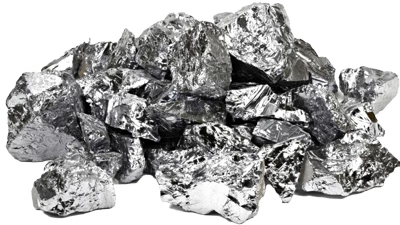
As the second most abundant element on Earth, silicon is an important trace element; the human body contains a total of 1.4 grams of silicon and it is found in almost every cell. It is a crucial nutrient and building material for cartilage mass, connective tissue, skin, hair and nails. It improves moisture retention and thereby increases the firmness and elasticity of the tissue. In addition, collagen and elastin are an important aid in the formation of connective tissue fibres. As a component of bone-forming cells, silicon is important for the mineralisation of bones. The essential trace element must be obtained through the diet. The amount the body requires daily is not precisely known, which is why there are no official intake recommendations. Silicon-rich foods include, among others, potatoes, millet, wheat, parsley, cauliflower, strawberries, spinach, grapes, peas, peppers and pears... Read more

Silicea Complex, 90 capsules
Contents/Net quantity: 0.059 Kilogramm (€322.03 / 1 Kilogramm)
Not essential but vital?
Silicon is a trace element, that much is certain. But is it also essential? That is, would we become ill or, in the worst case, die if we consumed 0.0 g of silicon for years? This question is answered inconsistently both in science and in government circles. The EFSA, responsible for dietary recommendations in Europe, does not consider it essential. Many scientists and physicians regard it as absolutely essential.
Silicon, a mineral and trace element, is crucial for the stability and elasticity of connective tissue, bones, hair and nails. In nature it exists in bound forms, such as silicic acid or in minerals like quartz. It is also supplied through dietary intake, for example via water, beer and wholegrain products.
Occurrence and intake
- In nature: Silicon is the second most abundant element in the Earth's crust after oxygen and occurs in rocks, sand and minerals.
- In the body: It is found mainly in connective tissue, in blood vessels, the skin, hair and bones.
- In food: Silicon is consumed mainly in bound form, such as silicic acid. Mineral and drinking water, beer, millet, potatoes, wholegrain products and onions are good sources.
Role and importance in the human body
- Structure: Silicon supports the formation of collagen and elastin, thereby contributing to the strength and elasticity of connective tissue.
- Bones and joints: It strengthens bones and cartilage, likely counteracts tissue ageing and reduces the risk of osteoporosis.
- Skin, hair and nails: Silicon contributes to stronger hair, increased skin elasticity and less brittle nails.
- Cell protection: It may promote the immune system and has anti-inflammatory properties.
For those who want to know the details, the doctoral thesis by Dr Lucia Ratzke is recommended. If that's too much text, including all introductions, explanations of scientific methods, etc. etc.: from p. 17 it gets interesting.