
Pantothenic acid – the energy vitamin
The authorised health claims for pantothenic acid (vitamin B5) clearly indicate an important role in normal energy-yielding metabolism. It contributes to the reduction of tiredness and fatigue and promotes normal mental performance. It is also important for the synthesis and metabolism of steroid hormones, vitamin D and some neurotransmitters... Read more

Pantothenic acid (vitamin B5), 60 capsules
Contents/Net quantity: 0.018 Kilogramm (€994.44 / 1 Kilogramm)

Vitamin B5 250 mg, 100 capsules
Contents/Net quantity: 0.052 Kilogramm (€483.65 / 1 Kilogramm)

Vitamin B5, 90 capsules
Contents/Net quantity: 0.064 Kilogramm (€234.38 / 1 Kilogramm)
Importance of vitamin B5
Pantothenic acid, also called vitamin B5, belongs to the water-soluble B complex and is essential for human energy metabolism. It is an essential component of coenzyme A, which is required for the synthesis and breakdown of fats, carbohydrates and amino acids as well as for the synthesis of steroid hormones and cholesterol. A deficiency of pantothenic acid is rare due to its widespread occurrence in foods and a balanced diet.
Role and significance
- Energy metabolism: Pantothenic acid is crucial for metabolism because, as a component of coenzyme A, it enables the breakdown of nutrients to produce energy.
- Nutrient metabolism: It is essential for the formation and breakdown of fats, carbohydrates and proteins as well as for the synthesis of cholesterol and steroid hormones.
- Hormone production: The adrenal glands require pantothenic acid to produce steroid hormones.
Food sources and occurrence
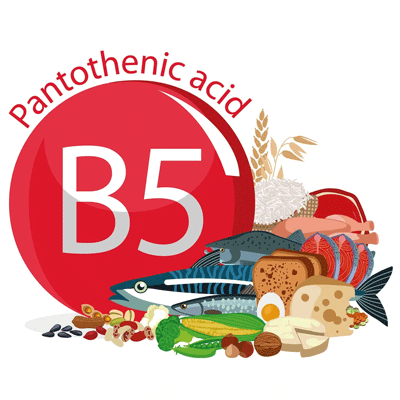
Many foods, such as fish, avocado, lentils, eggs, brewer's yeast and nuts contain pantothenic acid. Added to these are offal. Also wholegrain products and vegetables such as.
Symptoms of a deficiency
Because pantothenic acid is present in many foods, a deficiency is rare. A characteristic sign is the so-called "burning feet syndrome".