
Vitamin E – Tocopherols and Tocotrienols
"Vitamin E" is not a single substance, but rather a term for several chemically similar compounds that have varying degrees of vitamin E activity. The cheapest and poorest version is synthetic tocopherol; natural tocopherols are better, and tocotrienols are the most interesting in terms of their effects, although they are also the most expensive... Read more

SUN-E 400 with tocotrienols, 90 capsules
Contents/Net quantity: 0.053 Kilogramm (€560.38 / 1 Kilogramm)

SuperVitamin E Plus, 20 ml
Contents/Net quantity: 0.02 Liter (€1,340.00 / 1 Liter)

Tocotrienols + Tocopherol, 60 vegetarian capsules
| Blend of effective vitamin E derivatives. Enhanced protective effect from tocotrienols. |
Contents/Net quantity: 0.015 Kilogramm (€1,600.00 / 1 Kilogramm)

Tocotrienols and E-Complex, 60 capsules
Contents/Net quantity: 0.031 Kilogramm (€858.06 / 1 Kilogramm)

Vitamin E Complex Tocotrienol, 60 capsules
Contents/Net quantity: 0.036 Kilogramm (€1,147.22 / 1 Kilogramm)

Vitamin E drops, 50 ml
Contents/Net quantity: 0.05 Kilogramm (€360.00 / 1 Kilogramm)

Vitamin E-8, 60 capsules
Contents/Net quantity: 0.036 Kilogramm (€998.61 / 1 Kilogramm)
Vitamin E - Important for the immune system
Vitamin E, also known as tocopherol, comprises a range of fat-soluble chemical substances that act as an effective antioxidant by protecting cells from damage by free radicals and ensuring the stability of cell membranes. It is important for the immune system and affects blood clotting and inflammatory responses. Fats from plant oils, nuts and seeds are good sources, while deficiency is rare and often due to problems with fat absorption.
Role in the body
- Cell protection: Vitamin E acts as an antioxidant and neutralises free radicals that can damage cells.
- Membrane stabilisation: It protects and stabilises cell membranes by preventing the oxidation of unsaturated fatty acids.
- Immune system: Vitamin E is important for a healthy immune system. It influences the production of tissue mediators involved in inflammatory processes.
Foods and storage
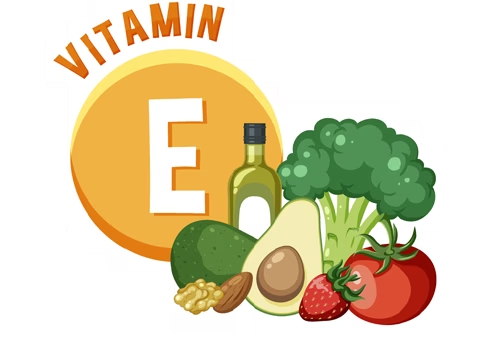
- Good sources: The best sources are vegetable oils (such as sunflower oil), nuts (e.g. hazelnuts, almonds), seeds and wheat germ.
- Animal sources: The concentration of vitamin E in animal foods is lower, though it is found in oily fish.
- Storage: As it is sensitive to light and oxygen, foods high in vitamin E should not be stored for long periods.
Importance and deficiency
- Increasing need: As dietary intake of unsaturated fatty acids rises, the need to obtain vitamin E also increases.
- Rarity of deficiency: Deficiency is uncommon, as requirements are generally met by a balanced diet and vitamin E is stored in adipose tissue.
- Possible causes of deficiency: Disorders of fat digestion caused by diseases of the liver or gallbladder can impair vitamin E absorption.