
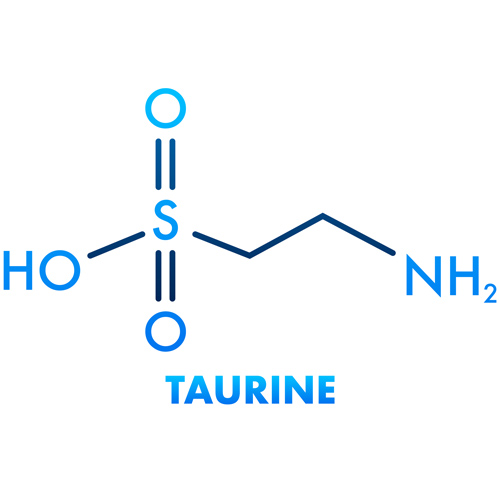
Taurine - widely known from energy drinks
Taurine is an amino acid that the body produces itself. Taurine, derived from the Latin word "taurus" for bull, is a derivative of the sulphur-containing amino acid cysteine, which is considered semi-essential. The name is explained by the fact that it was first detected in the bile of a bull. As a free amino acid, L-taurine is found mainly in the heart, the central nervous system, in the muscles and also in the eye. The good news is that our body naturally produces this amino acid and, in healthy adults, usually in sufficient amounts. As a supplement, it is therefore particularly popular before or during very intense exertion... Read more

Magnesium bisglycinate 100 mg with taurine, 120 tablets
Contents/Net quantity: 0.2 Kilogramm (€134.75 / 1 Kilogramm)

Magnesium bisglycinate 100 mg with taurine, 60 tablets
Contents/Net quantity: 0.1 Kilogramm (€152.00 / 1 Kilogramm)

Taurine 500 mg, 60 capsules
Contents/Net quantity: 0.02 Liter (€897.50 / 1 Liter)

Taurine, 120 capsules
Contents/Net quantity: 0.1 Kilogramm (€201.00 / 1 Kilogramm)
Which natural sources provide taurine?
Taurine occurs naturally in foods such as beef, fish, seafood, eggs and dairy products. It is also present in breast milk, which explains why it is often added to infant formulas. Only a few plant sources, such as algae, contain taurine.
Taurine as a dietary supplement
As an ingredient in a dietary supplement, taurine can be taken in various forms: as capsules, powder or energy drinks. It is, of course, important to follow the dosage stated on the chosen product. This varies from person to person, particularly in deficiency states and depending on the desired effect. Accordingly, recommendations can range from 300 mg to 3 g per day.