
Magnesium, together with potassium, the most important cation in cells
Magnesium is found mostly in the bones and in skeletal muscle. It affects not only these, but also the cardiac muscle and the autonomic musculature of many organs, such as the blood vessels or bronchi. In addition, magnesium supports many enzyme systems..... Read more

Magnesium Sport 100 mg, 120 tablets
Contents/Net quantity: 0.21 Kilogramm (€140.95 / 1 Kilogramm)

Multi-Chelate Magnesium, 180 capsules
Contents/Net quantity: 0.134 Kilogramm (€267.91 / 1 Kilogramm)

Vitamin C + Magnesium, 90 capsules
Contents/Net quantity: 0.114 Kilogramm (€275.88 / 1 Kilogramm)

Vitamin C powder, 200 grams magnesium ascorbate
Contents/Net quantity: 0.2 Kilogramm (€175.00 / 1 Kilogramm)
What is magnesium?
Magnesium is an essential mineral that is crucial for the smooth functioning of the body and is found in teeth, bones, cells (both intra- and extracellular), blood, muscles, the liver and some soft tissues. Historically, the term "magnesium" is derived from the name "Magnesia", a Greek city where deposits of magnesium bicarbonate were found. In the early 19th century, Humphrey Davy, a British chemist, succeeded in isolating magnesium using the electrolysis method, in which particles are split by means of electric current. However, the importance of this mineral was not discovered until 1926 by a French researcher. Magnesium is involved in more than 300 enzymatic reactions and works closely with potassium, sodium and calcium.
In which foods is magnesium found?
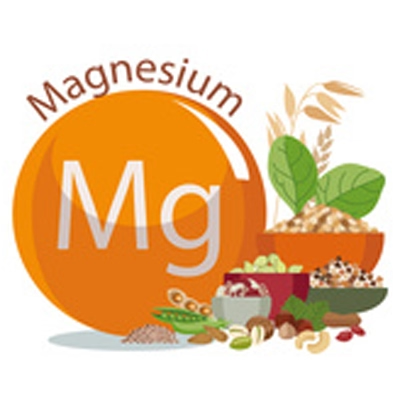
Magnesium is present in various plant-based foods:
- Legumes such as black and white beans, lentils, etc. Green vegetables such as cabbage, lettuce, spinach, etc.
- Dried fruits such as cashews, hazelnuts, almonds, etc.
- Whole grains such as oats, brown rice, millet, quinoa, etc.
- Dark chocolate.
At first glance it may seem easy to get enough magnesium, right? Unfortunately, in reality it is not quite that simple. The deterioration of soil quality and the industrialisation of the agricultural and food sectors have led to a decrease in the natural mineral content of foods, including magnesium. Other factors such as stress, overwork, intense exercise, consumption of caffeine, sugar and alcohol can lead to a drop in the body's magnesium levels. The same applies to taking contraceptive pills and certain antibiotics.
Benefits of magnesium
The benefits of magnesium for our body are manifold. Magnesium influences the following bodily functions:
- Magnesium contributes to the reduction of tiredness and fatigue
- Magnesium contributes to electrolyte balance and to normal energy metabolism, and has a role in cell division
- Magnesium contributes to normal functioning of the nervous system and to normal psychological function
- Magnesium contributes to normal muscle function and to normal protein synthesis
- Magnesium contributes to the maintenance of normal bones and teeth