
The importance of minerals
Inorganic minerals are essential nutrients that are necessary for many bodily functions but cannot be produced by the body itself. They are categorised into major minerals (e.g. calcium, magnesium) and trace elements (e.g. iron, iodine) and perform functions such as the formation of teeth and bones, blood formation, muscle and nerve function, as well as the regulation of fluid balance. Dietary supplements can be necessary in cases of deficiency or overdose, but should be used under medical supervision, while a balanced diet ensures adequate intake... Read more








Mumijo Shilajit plus Copper, 60 capsules
Contents/Net quantity: 0.036 Kilogramm (€500.00 / 1 Kilogramm)

Natural iodine 200 mcg, 120 capsules
Contents/Net quantity: 0.038 Kilogramm (€413.16 / 1 Kilogramm)

newXise Daily Minerals, 150 capsules
Contents/Net quantity: 0.127 Kilogramm (€501.97 / 1 Kilogramm)

PH-Drink Bifido Activator alkaline multi-mineral drink with lemon flavour
Contents/Net quantity: 0.384 Kilogramm (€77.08 / 1 Kilogramm)

PH-DRINK SUGAR-FREE sugar-free multimineral base drink
Contents/Net quantity: 0.21 Kilogramm (€98.10 / 1 Kilogramm)

Phyto-Calcium, 60 capsules
Contents/Net quantity: 0.041 Kilogramm (€602.44 / 1 Kilogramm)

Potassium 200 mg, 100 capsules
Contents/Net quantity: 0.099 Kilogramm (€217.68 / 1 Kilogramm)

Potassium, 120 capsules
Contents/Net quantity: 0.104 Kilogramm (€163.46 / 1 Kilogramm)

Prost Assist, 60 capsules
Contents/Net quantity: 0.033 Kilogramm (€727.27 / 1 Kilogramm)

Sango coral, 200 g powder
Contents/Net quantity: 0.2 Kilogramm (€112.50 / 1 Kilogramm)

Sango Coral, 90 capsules
Contents/Net quantity: 0.11 Kilogramm (€212.73 / 1 Kilogramm)

Sango sea coral from Okinawa, 100 g powder
Contents/Net quantity: 0.1 Kilogramm (€107.00 / 1 Kilogramm)
Minerals are indispensable
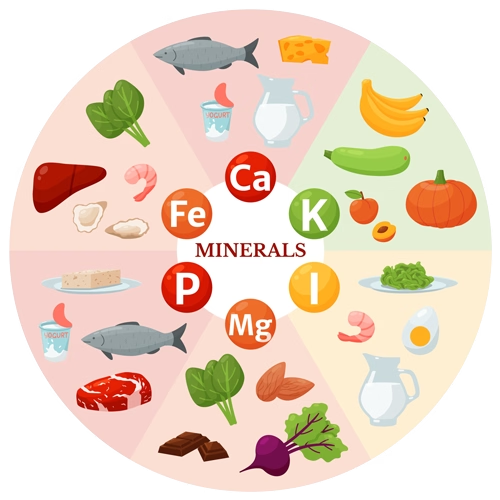
Minerals are essential nutrients that the body cannot produce itself and must be supplied through the diet. They are classified into major minerals such as calcium, potassium and magnesium and trace elements such as iron, zinc and iodine, depending on the body's requirement. Minerals are essential for the formation of bones, teeth and cells, the regulation of nerve functions and water balance, as well as for strengthening the immune system.
Why are minerals important?
Although minerals do not provide energy, they play a crucial role in metabolism and in the extraction of energy from fats, carbohydrates and proteins:
- Body structures: They form the essential components for teeth, bones, hormones and blood cells.
- Nerve and muscle activity: Minerals play a role in the transmission of nerve impulses and contribute to the proper functioning of muscles.
- Hormone production: Some minerals, such as iodine, are part of hormones (e.g. thyroid hormones).
- Fluid balance: They are important for maintaining the osmotic equilibrium and the electrolyte balance in the body.
Classification according to requirement
- Major minerals: The body needs them in larger amounts (over 50 mg per kilogram of body weight). Calcium, magnesium, sodium, potassium and phosphorus are examples.
- Trace elements: They occur in the body only in small amounts. Consequently the body's requirement for these substances is extremely small, but these small amounts are nevertheless absolutely vital. These include iron, zinc, iodine and selenium.
Daily intake is necessary!
Minerals cannot be produced by the body itself, which is why they must be supplied through foods and drinks. Compared with vitamins they are relatively insensitive to heat, light and oxygen, but they can leach into the cooking water during prolonged cooking.
The body excretes minerals daily and must compensate for this loss through a balanced diet.
Important examples of minerals
- Calcium: Essential for teeth and bones.
- Magnesium: Involved in many metabolic processes.
- Sodium: Essential for fluid balance and nerve function.
- Potassium: Regulates nerve function and fluid balance.
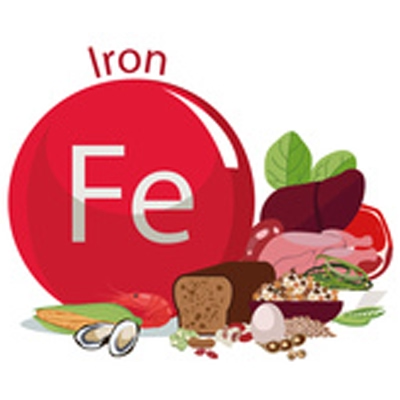
- Iron: Component of red blood cells and crucial for the transport of oxygen.
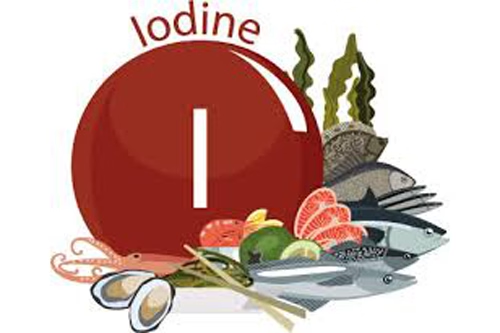
- Iodine: Essential for thyroid hormones.
- Zinc: Promotes the function of the immune system as well as various metabolic processes. ^